Home / Articles
What to Expect During Your ICL Surgery at SNU Eye Clinic?
Home / Articles
What to Expect During Your ICL Surgery at SNU Eye Clinic?
Most patients who walk into SNU Eye Clinic for an ICL consultation arrive with a mix of excitement and nerves. Many have worn glasses since childhood. Some have tried every type of contact lens available, only to deal with dryness or irritation. And almost all of them ask the same question:
If you’re considering implantable Collamer lens (ICL) surgery — one of the safest and most accurate refractive procedures available today — this guide will walk you through every step, from the moment you enter our Gangnam clinic to the moment you leave with newly sharpened vision.
And for many people with high myopia, thin corneas, or dry-eye tendencies, it offers clarity that even LASIK cannot match.
At SNU Eye Clinic, the most common comment we hear after surgery is:
“I can’t believe how natural my vision feels — like the eyesight I always should have had.”
Below is a realistic timeline of what happens on your ICL surgery day at SNU Eye Clinic. Each step is designed for precision, safety, and patient comfort.
Think of it as pre-flight confirmation before takeoff — important, quick, and thorough.
You can expect:
Confirmation of your ICL parameters
Review of your eye pressure and hydration status
A final conversation with Dr. Chung to answer last-minute questions
Pupil-dilating and numbing eye drops (no injections needed)
Many patients remark that this moment is when their nerves settle, because they realize how calm, coordinated, and confident the surgical team is.
To be honest, even celebrities and public figures — who visit us quietly and frequently — share the same nervous excitement. But six or seven minutes into the procedure, they often laugh and say, “Oh, that was it?”
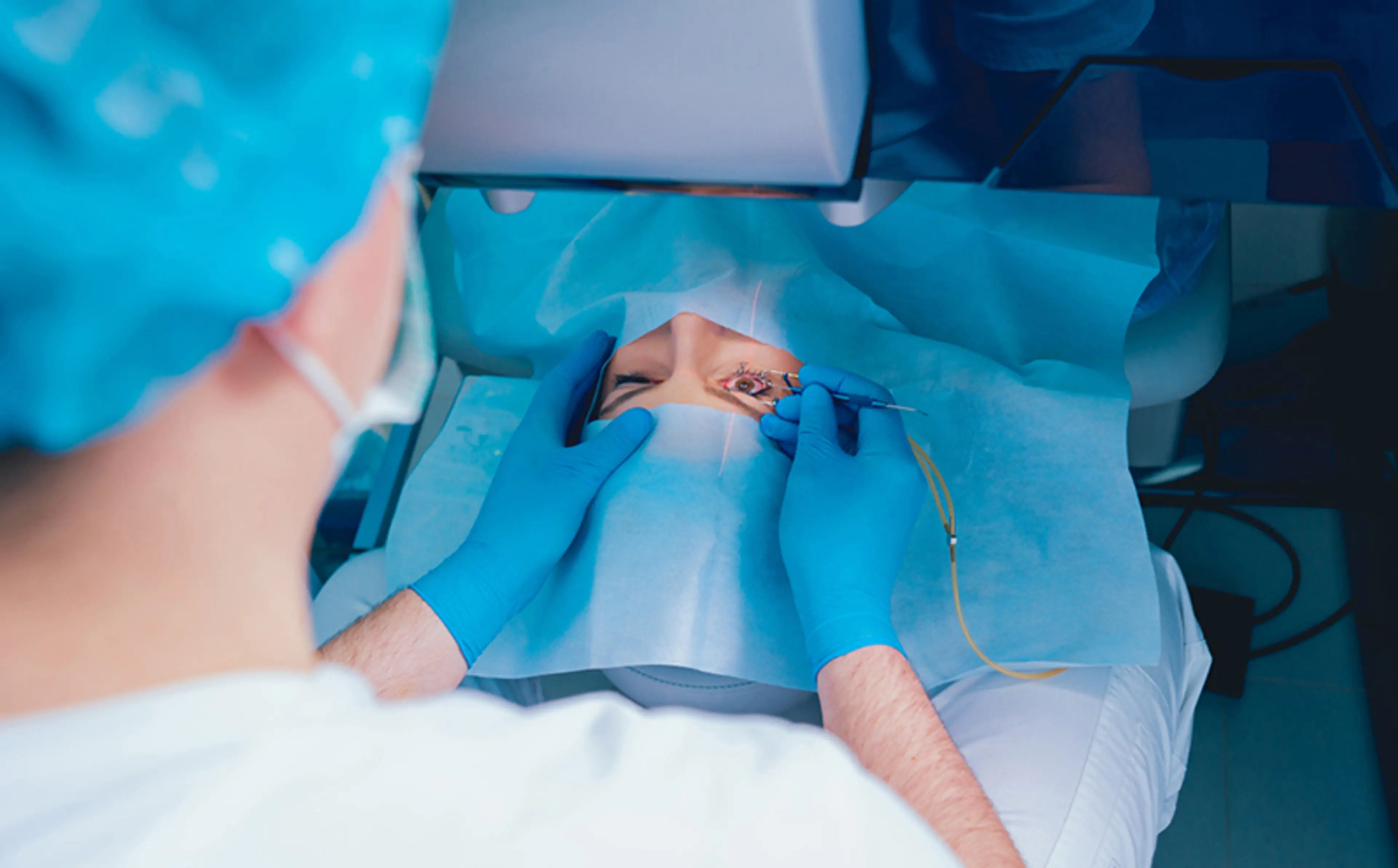
Unlike the intimidating operating rooms you might imagine from movies, modern refractive surgery suites are small, quiet, and human-friendly.
At SNU Eye Clinic:
The room lighting is soft
The temperature is optimized for lens stability
You lie on a cushioned surgical bed
A nurse gently positions your head
Dr. Chung explains each upcoming step so you always know what to expect
Most patients describe the environment as “surprisingly peaceful,” often more relaxing than a dental visit.
Here’s what actually happens:
Patients usually describe the sensation as:
Cool water flowing
Gentle pressure
Nothing uncomfortable
Once inside, the ICL unfurls smoothly and naturally. Because Collamer is soft and biocompatible, it adapts instantly to the eye’s environment.
Using micro-instruments, the lens is tucked behind the iris — completely invisible from the outside.
This takes a matter of seconds for an experienced surgeon. With Dr. Chung’s high-volume expertise, the entire process is efficient, stable, and predictably smooth.
Most patients report:
Seeing shapes or soft lights
Zero sharp pain
A sense of “something happening,” but not discomfort
Surprise at how fast everything finishes
One young professional from Gangnam, who had -9.00 diopters, told us after surgery:
“Honestly, the anticipation was worse than the procedure. If I knew it was this easy, I would have done it during college.”
After both eyes are completed, you’re gently guided to an exam room next door.
Dr. Chung checks:
Lens vault (spacing)
Intraocular pressure
Pupil reaction
Initial clarity
Most people can already see the improvement — blurry around the edges because of dilation, but noticeably sharper than before.
You’ll rest briefly in a recovery chair while the eye drops begin to settle.
During this quiet window:
Vision continues to clear
The eye adjusts to the new lens
You begin to feel a light sensation, similar to wearing contacts for the first time
Any dryness or scratchiness is minimal and temporary
Most patients feel well enough to walk out comfortably.
Expect:
Mild haloing around lights (usually temporary)
No significant pain
Slight watery eyes or light sensitivity
A feeling of “new clarity” emerging hour by hour
Many patients return home and message us:
“I can already read the numbers on street signs. This is surreal.”
On the morning after surgery, you’ll visit SNU Eye Clinic for a detailed assessment.
We evaluate:
Lens position and vault
Corneal clarity
Eye pressure
Visual acuity (many patients see 20/20 or better on day one)
With so many options in Gangnam’s competitive medical district, patients often ask what makes SNU Eye Clinic trusted by both local and international individuals, including public figures and professionals requiring precise visual performance.
Here are the distinct advantages:
Accurate lens sizing
Safe vault prediction
Corneal stability evaluation
Screening for hidden risks
This level of detail is one reason our complication rates remain exceptionally low.
Dr. Chung Eui Sang brings a rare combination of:
Seoul National University training
Former professorship
Harvard Medical School research fellowship
Extensive experience at Samsung Seoul Hospital
50,000+ total refractive/cataract surgeries
5,000+ ICL cases completed
From the way our staff guide you through each step to our warm, private recovery spaces, the entire surgical day is designed to reduce anxiety.
Patients frequently comment:
“It felt more like a premium spa experience than a surgery.”
Lens type (EVO ICL, Toric ICL)
Lens power
Incision location
Vault expectations
Post-care protocols
This customization ensures long-term safety and clarity.
True refractive care doesn’t end when your vision becomes clear.
SNU Eye Clinic provides:
Lifelong monitoring
Rapid-response communication
Annual vault assessments
Management for unique lifestyle needs (e.g., pilots, athletes, designers)
Many of our ICL patients return years later simply to say, “My vision still feels perfect.”
Not at all — numbing drops ensure comfort. Most patients feel only light pressure.
A gentle eyelid holder keeps your eye comfortably open. You won’t need to worry about blinking.
Many return to office work the next day. Exercise and swimming require brief restrictions.
No. The lens sits behind the iris — completely invisible and unnoticeable.
Indefinitely. It does not degrade. If needed in the future, it can be removed or upgraded.
ICL is one of the most powerful and reversible vision correction solutions available today. Whether you struggle with high myopia, astigmatism, or frustration with glasses and contacts, the experience at SNU Eye Clinic is intentionally crafted to be safe, calm, and transformative.
If you're unsure whether you're a candidate or simply want expert guidance tailored to your eyes, a consultation with a precision-focused clinic like ours is the best next step.