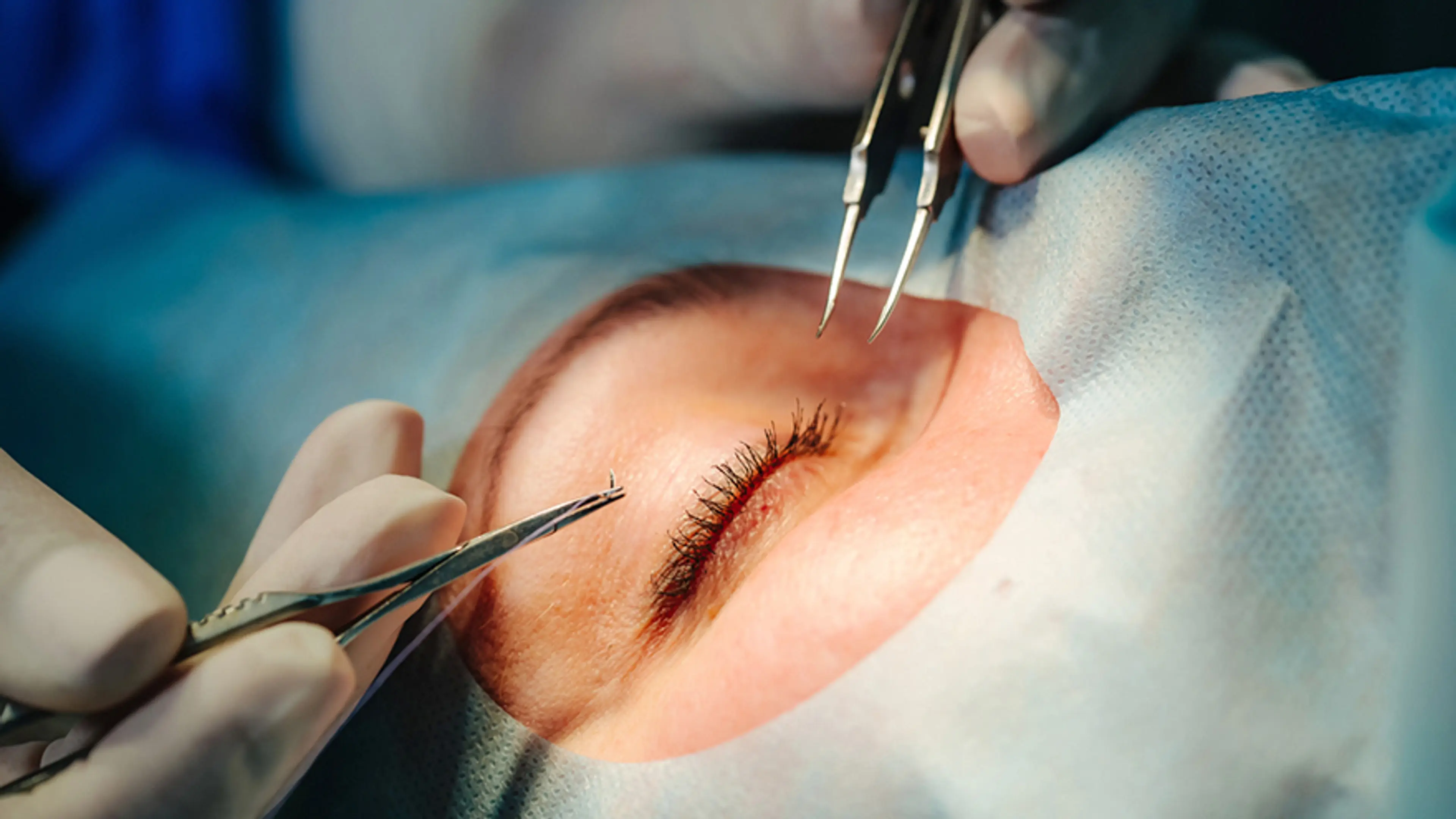
What Happens If You Have an Eye Injury After Surgery?
what-happens-if-you-have-an-eye-injury-after-surgeryThe Eye After Surgery: A Healing Organ
the-eye-after-surgery:-a-healing-organAfter any eye surgery — whether it’s corneal reshaping (like
SMILE or LASIK) or intraocular
lens implantation (
ICL or cataract) — your eye enters a
healing phase.
During this time, tissues are repairing themselves:
The corneal surface seals and smooths out.
Internal inflammation subsides as the immune system stabilizes.
The eye gradually returns to its normal structural strength.
For procedures like
SMILE PRO, healing is particularly fast because it’s
minimally invasive — no large corneal flap is made, only a microscopic keyhole incision of about 2–3 mm. Still, even this small incision takes a few days to bond securely.
That’s why, in the first few weeks after surgery, surgeons always emphasize eye protection — not because the surgery is fragile, but because the healing tissues are still vulnerable to impact or contamination.
What Kind of “Injury” Are We Talking About?
what-kind-of-"injury"-are-we-talking-aboutEye injuries after surgery can range widely. They include:
Minor trauma — accidental rubbing, mild poke, or cosmetic product irritation.
Moderate trauma — getting hit by a soft object (like a ball or elbow).
Severe trauma — high-impact accidents, falls, or direct eye penetration.
Each level of injury can have very different consequences depending on the type of surgery you’ve had.
If You Had SMILE or LASIK
if-you-had-smile-or-lasik
SMILE and LASIK surgeries reshape the cornea, the clear front surface of your eye.
In LASIK, a thin flap is created, lifted, then replaced.
In SMILE, there’s no flap — only a tiny incision.
Minor Injury (Rubbing or Poke)
minor-injury-(rubbing-or-poke)If you gently bump or rub your eye soon after surgery, you might feel some temporary irritation or watering. Usually, this causes no structural harm, especially with SMILE, because there’s no flap to dislodge.
In LASIK patients, however, excessive rubbing early on (within the first 1–2 weeks) could shift the flap, leading to temporary blurring or discomfort — something that can be corrected easily if treated quickly.
Moderate to Severe Injury
moderate-to-severe-injuryA stronger hit, such as a sports-related impact, can potentially:
That’s why most surgeons recommend avoiding contact sports, swimming, and eye makeup for the first few weeks — it’s a short-term precaution to protect your investment in clear vision.
At SNU Eye Clinic, we use the VisuMax 800 system for SMILE PRO, which minimizes suction time and tissue stress. The incision is so small that even if minor trauma occurs, healing is usually uneventful.
In over 50,000 procedures, including thousands of SMILE and LASIK cases, post-surgery injuries are extremely rare — and when they do occur, early management ensures full recovery.
If You Had ICL or Cataract Surgery
if-you-had-icl-or-cataract-surgeryThese surgeries are intraocular — meaning they involve the inner structures of the eye.
Minor Injury
minor-injuryA gentle bump may cause mild redness or transient discomfort but usually doesn’t affect the implanted lens. The lens sits securely in place, supported by natural anatomy.
Moderate or Severe Injury
moderate-or-severe-injuryHowever, a strong impact (e.g., sports accident, car airbag, or sharp object) can:
Cause inflammation inside the eye.
In rare cases, shift the lens position.
Lead to bleeding or retinal tears if trauma is deep.
These are medical emergencies — but even then, with
prompt treatment, outcomes are often good. At
SNU Eye Clinic, our post-op monitoring includes
high-resolution anterior segment imaging that can detect even subtle changes early.
What to Do Immediately After an Eye Injury?
what-to-do-immediately-after-an-eye-injury
Whether it feels serious or not, never ignore eye trauma after surgery. Here’s what you should do:
Do not rub or press the eye.
Pressure can worsen damage or dislodge healing tissue.
Apply preservative-free artificial tears if the eye feels dry or irritated.
This can soothe the surface temporarily.
Avoid rinsing with tap water or using non-sterile drops.
These can introduce bacteria.
Wear your protective glasses or eye shield if advised by your surgeon.
Contact your clinic immediately.
Even a “small” injury can be assessed quickly through a slit-lamp exam or anterior segment OCT.
At SNU Eye Clinic, emergency follow-up slots are always available for post-surgery patients — because timing matters. The earlier the evaluation, the higher the chance of full, scar-free recovery.
How Surgeons Manage Eye Injuries Post-Surgery?
how-surgeons-manage-eye-injuries-post-surgeryWhen you visit the clinic after an injury, your ophthalmologist will:
Check visual acuity and corneal integrity.
Examine intraocular pressure (to rule out swelling).
Use fluorescein dye to detect any corneal scratch or leakage.
In ICL or cataract cases, perform slit-lamp and anterior chamber exams to ensure the lens is stable.
Possible Treatments:
possible-treatments:Topical antibiotics or anti-inflammatory drops for surface protection.
Bandage contact lens to promote corneal healing if the epithelium is scratched.
Corneal flap repositioning (rarely needed, for LASIK only).
Intraocular pressure or lens adjustment (for deeper trauma).
In 95%+ of cases, early medical care leads to complete visual recovery without long-term effects.
Why Expert Follow-Up Makes All the Difference?
why-expert-follow-up-makes-all-the-differenceA well-trained surgeon — especially one with experience across corneal, refractive, and cataract surgeries — can differentiate between a surface issue and something deeper.
Dr. Chung Eui Sang, the director of
SNU Eye Clinic, brings that rare combination of academic precision and practical experience. Trained at
Seoul National University, and having served at
Samsung Seoul Hospital and
Harvard Medical School, Dr. Chung has performed over
50,000 successful eye surgeries — including more than
5,000 ICL cases.
That depth of experience matters most in unexpected situations — such as post-op trauma — because it allows for calm, accurate, and decisive treatment that prevents complications before they develop.
A Patient’s Story
real-world-example:-a-patient's-storyOne of our SMILE PRO patients, a 29-year-old designer, returned two weeks after surgery after accidentally bumping her eye while reaching for her glasses. She was worried that she had “ruined” her vision.
Our exam showed no damage — the tiny SMILE incision was completely sealed, and her cornea looked pristine. Within minutes, her anxiety turned into relief.
Her story isn’t unique — minor bumps happen all the time. The key difference lies in timely evaluation and modern surgical design that makes today’s procedures safer than ever.
How to Protect Your Eyes After Surgery?
how-to-protect-your-eyes-after-surgeryHere are simple but crucial habits to protect healing eyes:
Use protective glasses outdoors or during physical activity.
Avoid sleeping face-down in the first week.
Keep water and soap out of the eyes for a few days.
Don’t wear eye makeup until cleared by your surgeon.
Wait 3–4 weeks before contact sports or swimming.
Follow your drop schedule exactly as prescribed.
Healing doesn’t just depend on the surgery — it depends on you giving your eyes the chance to recover fully.
The Bottom Line
the-bottom-lineAn eye injury after surgery can be alarming, but with modern techniques, expert care, and quick response, most patients recover without lasting issues.
SMILE and SMILE PRO offer strong corneal stability and rapid recovery.
ICL and cataract procedures have secure, stable lens positions that resist displacement.
Prompt medical attention after any trauma ensures protection from complications.
If you’ve had eye surgery — or are considering it — and worry about “what if something happens later,” know that a well-equipped clinic like SNU Eye Clinic is prepared for every scenario, from daily checkups to rare emergencies.
Reassurance From Experience
reassurance-from-experienceTo be honest, most people don’t realize how resilient the eye becomes after proper healing. Within weeks, most surgical sites are as stable as untouched tissue — especially with SMILE PRO or ICL. Still, it’s completely normal to feel cautious.
If you ever experience an accident, don’t panic — reach out to your doctor, and let experienced hands guide you.
At SNU Eye Clinic, every patient’s journey continues long after the day of surgery — with lifelong follow-up care and the reassurance that your vision is protected by a team that has seen, managed, and perfected it all.