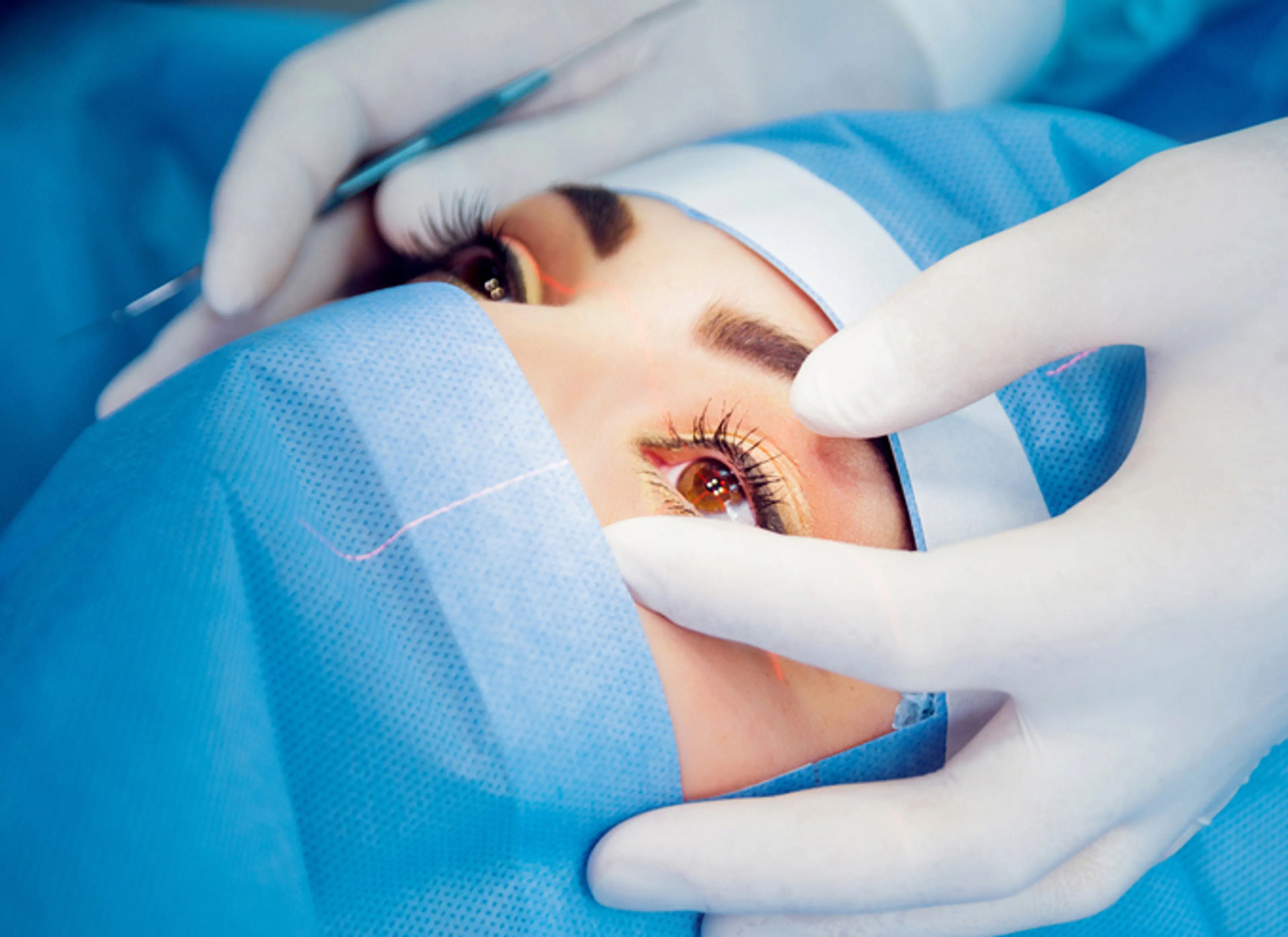
Re-Correction Options After SMILE or LASIK: What’s Safe?
re-correction-options-after-smile-or-lasik:-what's-safeImagine this scenario. You had SMILE or LASIK years ago. Life without glasses felt liberating — driving at night, swimming, waking up and seeing clearly. But now, something feels off. Your vision isn’t as crisp as it used to be. Maybe it’s subtle blur, mild astigmatism, or eye strain after long hours on a screen.
One of the most common questions we hear in our consultation rooms is:
“I already had laser eye surgery. Can my vision be corrected again — and is it safe?”
The short answer is yes, re-correction is often possible.
The more important answer is it depends on how it’s done, when it’s done, and how precisely your eyes are evaluated.
At SNU Eye Clinic in Gangnam — where SMILE, LASIK, ICL, and cataract surgery are performed daily — we see many patients seeking re-correction after surgery done elsewhere, sometimes years or even decades earlier. This article explains, in clear and honest terms, what re-correction options exist after SMILE or LASIK, who is a good candidate, and what safety truly depends on.
Why Vision Can Change After SMILE or LASIK?
why-vision-can-change-after-smile-or-lasikTo be honest, most people assume laser vision correction is “once and forever.” In reality, the eye is a living structure, and vision can change over time — even after an excellent surgery.
Common Reasons Patients Seek Re-Correction
common-reasons-patients-seek-re-correction1. Residual or under-correction
Even with modern lasers, small refractive errors can remain. This may be noticeable at night or during fine-detail tasks.
2. Regression over time
Some patients — especially those with high myopia before surgery — experience gradual regression as the cornea subtly remodels.
3. Natural aging of the eye
Presbyopia (age-related near vision decline) typically begins in the 40s, regardless of prior LASIK or SMILE.
4. Changes in lifestyle or visual demands
Many young professionals who had SMILE in their 20s return in their 30s after years of screen-heavy work.
5. Surgery done with older-generation technology
Patients who had LASIK 10–20 years ago often benefit from modern re-correction techniques unavailable at the time.
Importantly, needing re-correction does not mean the first surgery failed. It simply reflects how vision and technology evolve.
Is Re-Correction After Laser Eye Surgery Safe?
is-re-correction-after-laser-eye-surgery-safeThis is the most critical question — and the answer depends less on which procedure you choose and more on how carefully your eyes are evaluated beforehand.
At SNU Eye Clinic, we emphasize one principle:
Re-correction is safe only when corneal strength, thickness, and biomechanics are fully respected.
A rushed enhancement can compromise corneal stability. A conservative, precision-based approach preserves long-term eye health.
Step One: Advanced Diagnostics Matter More Than the Procedure
step-one:-advanced-diagnostics-matter-more-than-the-procedure
Before discussing how to re-correct, we must address whether it should be done at all.
Every patient considering re-correction undergoes:
High-resolution corneal tomography (front & back surface)
Residual stromal bed thickness analysis
Corneal biomechanical assessment
Wavefront and aberration analysis
Dry eye and tear film evaluation
Retinal and optic nerve examination
These tests help answer three non-negotiable questions:
Is the cornea structurally stable?
Is there enough tissue for additional laser correction?
Is laser re-correction the best option — or merely the most familiar one?
Only after this evaluation can safe options be discussed.
Re-Correction Options After LASIK
re-correction-options-after-lasikLASIK creates a corneal flap, which influences re-treatment choices.
1. LASIK Enhancement (Flap Lift)
1.-lasik-enhancement-(flap-lift)How it works:
The original LASIK flap is carefully lifted, and additional laser correction is applied.
When it’s appropriate:
Adequate corneal thickness remains
Flap interface is healthy
No signs of corneal weakening
Typically within several years of the original surgery
Pros:
Fast visual recovery
Familiar technique
Cons:
Increased risk of dry eye
Flap-related risks increase with time
Not suitable decades after initial LASIK
At SNU Eye Clinic, flap-lift enhancements are performed selectively and conservatively — never as a default.
2. PRK (Surface Laser) After LASIK
2.-prk-(surface-laser)-after-lasikHow it works:
Instead of lifting the flap, laser correction is applied to the surface of the cornea.
Why it’s often safer:
Trade-offs:
For many post-LASIK patients, PRK enhancement offers a safer long-term profile than repeated flap manipulation.
Re-Correction Options After SMILE
re-correction-options-after-smileSMILE is fundamentally different from LASIK — and that’s both a strength and a challenge.
Because SMILE does not create a flap, re-correction strategies must be carefully chosen.
1. Surface Laser (PRK) After SMILE
1.-surface-laser-(prk)-after-smileThis is currently the most common and safest enhancement method after SMILE.
Why PRK works well after SMILE:
Preserves corneal biomechanics
Avoids creating a new flap
Compatible with SMILE’s minimal-incision design
At our clinic, we often explain it this way:
SMILE is like slipping a lens through a tiny keyhole. If fine-tuning is needed later, surface polishing — not opening the door wider — is the safest approach.
2. SMILE Enhancement (Limited Cases)
2.-smile-enhancement-(limited-cases)In very specific situations, advanced surgeons may perform a second SMILE procedure, but this is not widely recommended and depends heavily on corneal anatomy and initial surgery parameters.
At SNU Eye Clinic, patient safety takes precedence over novelty, and we rarely recommend repeat SMILE unless all biomechanical criteria are ideal.
Lens-Based Re-Correction: A Safer Alternative for Many Patients
lens-based-re-correction:-a-safer-alternative-for-many-patientsOne of the most overlooked truths about re-correction is this:
Not every vision problem after laser surgery should be fixed with more laser.
ICL (Implantable Collamer Lens) After LASIK or SMILE
icl-(implantable-collamer-lens)-after-lasik-or-smileICL acts like a built-in contact lens, placed inside the eye without altering the cornea.
Why ICL is often safer for re-correction:
No further corneal tissue removal
Fully reversible
Excellent optical quality for higher corrections
Ideal for thin corneas or high residual myopia
At SNU Eye Clinic, where over 5,000 ICL procedures have been performed, many post-LASIK or post-SMILE patients find ICL to be the most stable long-term solution — especially if their original surgery was many years ago.
What About Presbyopia After SMILE or LASIK?
what-about-presbyopia-after-smile-or-lasikThis is a sensitive topic, especially for patients in their 40s and 50s.
Laser surgery does not stop aging of the lens inside the eye. When near vision declines:
Options May Include:
options-may-include:Monovision laser enhancement (selective cases)
Presbyopia-correcting lens surgery
ICL combined with reading strategies
Future cataract surgery planning
At SNU Eye Clinic, we emphasize life-stage planning, not short-term fixes. Sometimes the safest decision is not to enhance — but to prepare for the next phase of vision correction.
When Re-Correction Is NOT Recommended?
when-re-correction-is-not-recommendedA responsible clinic must also say no when needed.
Re-correction may be unsafe if:
Cornea shows signs of ectasia or instability
Residual thickness is insufficient
Severe dry eye is untreated
Visual complaints stem from non-refractive causes (retina, nerve, lens)
In such cases, alternatives — or simply observation — may be the healthiest choice.
Real Patient Journeys We See in Gangnam
real-patient-journeys-we-see-in-gangnamA 29-year-old SMILE patient returns 4 years later with mild astigmatism from intense screen work → PRK enhancement after stability confirmation.
A 45-year-old LASIK patient from overseas, surgery done 18 years ago → ICL chosen instead of laser for safety.
A 52-year-old executive with prior LASIK and new near-vision difficulty → presbyopia counseling and future lens planning.
Different eyes. Different lives. Different solutions.
The Most Important Takeaway
the-most-important-takeawayIf there is one message to remember, it is this:
Safe re-correction is not about doing “more surgery.” It is about doing the right surgery — or sometimes, choosing restraint.
Technology matters. Experience matters more. And diagnostics matter most.
Considering Re-Correction? What You Should Do Next
considering-re-correction-what-you-should-do-next
If you’ve had SMILE or LASIK and are noticing vision changes:
Do not assume you need immediate enhancement
Avoid clinics offering “quick touch-ups” without deep diagnostics
Seek evaluation at a precision-focused eye clinic with experience in post-surgery eyes
At SNU Eye Clinic in Gangnam, led by Dr. Chung Eui Sang — Seoul National University–trained, former professor, and Harvard Medical School alumnus — re-correction is approached with one priority: your eyes, 10–20 years from now.
Final Thought
final-thoughtIf you’ve been struggling with glasses again after laser surgery, you’re not alone — and you’re not out of options.
Ask your doctor the right questions.
Or consider a consultation at a clinic experienced in SMILE, LASIK, ICL, and long-term vision planning.
Clear vision should never come at the cost of safety.