Introduction
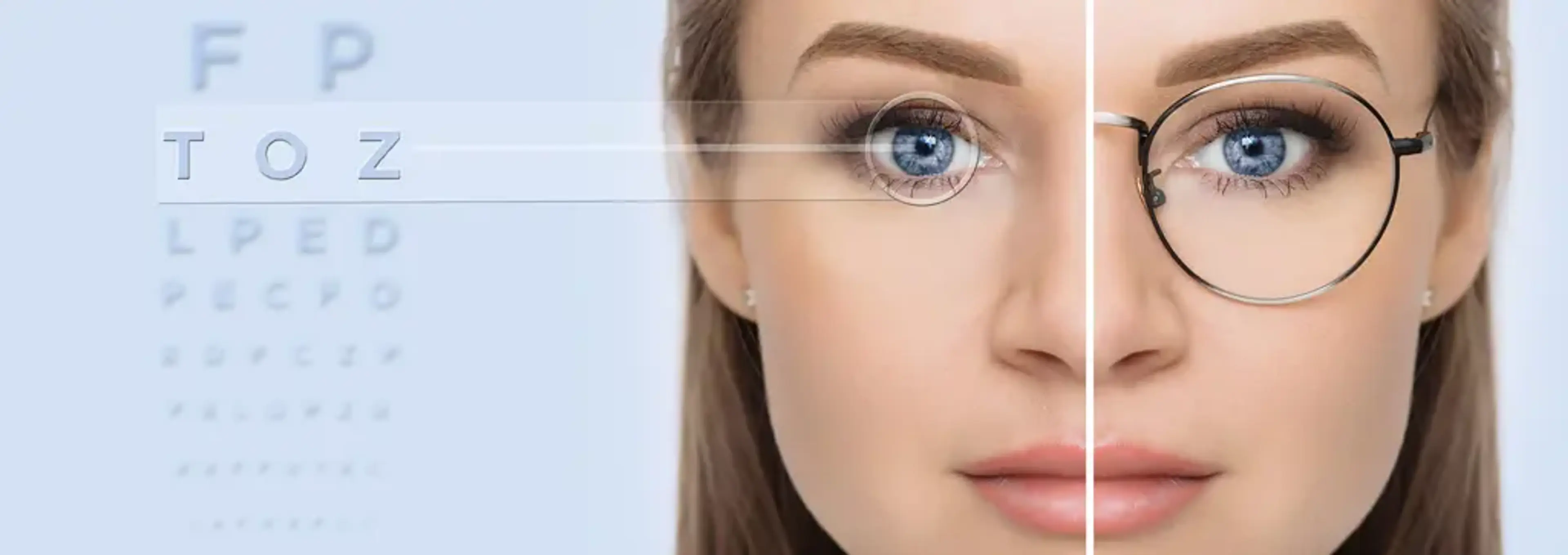
introductionImagine walking out of surgery and, for the first time in years, being able to judge the distance of a curb, catch a ball mid-air, or park your car with ease — all without glasses. Depth perception, the ability to sense the three-dimensional relationships between objects, is something most of us take for granted until vision problems disrupt it.
For patients considering vision correction surgery — whether SMILE LASIK,
lens implantation, or cataract surgery — one of the most common questions is:
Will my depth perception improve, stay the same, or be affected negatively? At SNU Eye Clinic in Gangnam, where over 50,000 successful surgeries have been performed under the expertise of Dr. Chung Eui Sang, this concern is addressed with careful diagnostics and individualized surgical planning.
What Is Depth Perception and Why Does It Matter?
what-is-depth-perception-and-why-does-it-matterDepth perception refers to the brain’s ability to interpret visual cues from both eyes to create a three-dimensional sense of space. This process, known as stereopsis, depends on binocular vision — the coordinated function of both eyes.
Everyday tasks that rely heavily on depth perception include:
Judging the distance between cars while driving
Stepping safely onto escalators or staircases
Playing sports that require catching, hitting, or throwing
Pouring liquid into a glass without spilling
Reading or using digital devices without eye strain
Without good depth perception, the world feels flat and less predictable. Patients often describe it as “knowing where things are, but not how far they really are.”
How Vision Problems Disrupt Depth Perception
how-vision-problems-disrupt-depth-perceptionEven mild differences between the eyes can disturb binocular vision. At SNU Eye Clinic, we often see patients who complain of clumsiness, fatigue, or poor confidence in dim light — all linked to subtle depth perception issues. Common causes include:
Unequal prescriptions (anisometropia): When one eye is significantly more nearsighted or farsighted than the other, the brain struggles to merge images. Glasses can make this worse by magnifying images differently in each eye.
Cataracts: Cloudy lenses scatter and blur incoming light, reducing contrast and making spatial judgment harder, especially at night.
Astigmatism: Because the cornea is uneven, images may appear stretched or doubled, preventing precise alignment between eyes.
Contact lens wear: Dryness or fluctuating focus can cause one eye to see more clearly than the other, producing inconsistent binocular vision.
In daily life, this can manifest as misjudging where a step begins, difficulty catching objects, or struggling with night driving. Some patients adapt subconsciously by relying more heavily on one eye, but this compensation often leads to fatigue and eye strain.
How Vision Correction Surgery Restores Depth Perception
how-vision-correction-surgery-restores-depth-perception
The reassuring news is that for the vast majority of patients, surgical correction enhances depth perception because both eyes are brought into sharper, more balanced focus.
1.-smile-pro-(small-incision-lenticule-extraction)SMILE is often described as “keyhole LASIK” because it uses a femtosecond laser to create a tiny incision instead of a full corneal flap. The procedure preserves corneal stability and induces less dry eye than traditional LASIK.
For depth perception:
Both eyes are typically corrected on the same day, so binocular vision is rebalanced almost immediately.
Because the treatment is minimally invasive, recovery is fast, and most patients notice sharper, more coordinated vision within 24–48 hours.
Athletes and young professionals often report that their spatial awareness in sports or driving feels more natural than with glasses or contacts.
At
SNU Eye Clinic, the use of
VisuMax 800 technology further reduces suction time and increases comfort, helping patients adapt more quickly to their new binocular vision.
2. Toric ICL (Implantable Collamer Lens)
2.-toric-icl-(implantable-collamer-lens)ICL surgery involves placing a thin, flexible lens inside the eye, behind the iris but in front of the natural lens. It acts like a permanent, maintenance-free contact lens.
For patients with high myopia or significant astigmatism, ICL offers unique advantages for depth perception:
Glasses often magnify or minify images, making each eye perceive the world at slightly different scales. By moving correction inside the eye, ICL eliminates this distortion.
Toric ICL specifically corrects astigmatism, aligning both eyes with crisp clarity.
Many patients say their vision feels “effortless,” as if their eyes are finally in sync.
Dr. Chung, who has performed over 5,000 ICL cases, emphasizes that patients with extreme prescriptions often experience the biggest improvements in depth perception post-surgery.
3. Cataract Surgery with Premium Lenses
3.-cataract-surgery-with-premium-lensesCataracts are a leading cause of depth perception loss in older adults. When the natural lens becomes cloudy, the brain receives a poor-quality image, disrupting stereopsis.
The cloudy lens is replaced with a clear intraocular lens (IOL).
Patients can choose advanced options such as toric lenses (for astigmatism) or trifocal lenses (for near, intermediate, and far vision).
The result is not only restored clarity but also renewed binocular harmony.
Patients often describe their postoperative experience as “like stepping into high-definition vision.” Colors appear brighter, contrast sharper, and spatial awareness returns.
Situations Where Depth Perception May Be Temporarily Affected
situations-where-depth-perception-may-be-temporarily-affected
While the long-term outcome is overwhelmingly positive, it’s important to set realistic expectations:
Early recovery phase: If one eye heals faster than the other, temporary imbalance may occur. This usually resolves within days to weeks.
Neural adaptation: The brain sometimes needs time to adjust, especially for patients transitioning from thick glasses or multifocal IOLs.
Temporary haze or dryness: During the first week after surgery, mild blurring may briefly interfere with depth cues.
At SNU Eye Clinic, patients are guided through these stages with close follow-up.
Vision stabilizes quickly, and most regain comfortable depth perception faster than they expect.
Why Precision Diagnostics Matter
why-precision-diagnostics-matterDepth perception is not simply about “seeing clearly” in each eye — it’s about ensuring the two eyes work in perfect harmony. That’s why preoperative testing at SNU Eye Clinic is so critical.
Advanced diagnostics include:
Corneal topography: Creates a 3D map of the cornea to detect even subtle astigmatism.
Ocular biometry: Measures eye length and lens position for accurate ICL sizing or IOL selection.
Binocular function assessment: Ensures both eyes are balanced, avoiding residual anisometropia.
Dr. Chung often tells patients:
“Our goal is not only to correct your prescription, but to restore the natural teamwork between your two eyes.”
Patient Perspectives
patient-perspectivesReal-world stories illustrate the impact of restored depth perception:
Young Professional (SMILE PRO): “I didn’t realize how much I was compensating with one eye before. After surgery, even simple things like pouring coffee feel effortless. I also feel safer driving at night.”
Engineer (Toric ICL): “With glasses, my world always felt slightly distorted. Now, both eyes match perfectly. My job involves precise measurements, and I no longer second-guess my vision.”
Retired Teacher (Cataract Surgery): “I cried when I could see the depth of my grandchildren’s faces clearly again. Even walking outside feels more vivid and safe. I didn’t know how much I had lost until I got it back.”
The Long-Term Outlook
the-long-term-outlookDepth perception typically improves after vision correction surgery — sometimes dramatically. Patients who once avoided certain activities (night driving, fast-paced sports, or unfamiliar environments) often regain confidence and independence.
Long-term follow-ups at SNU Eye Clinic show that with proper diagnostics and surgical precision, binocular vision remains stable for years, whether with SMILE, ICL, or cataract surgery.
It’s worth emphasizing that surgical expertise is just as important as technology. With over 30 years of surgical leadership, training from Seoul National University and Harvard Medical School, and thousands of successful cases, Dr. Chung ensures results that are not only safe but life-changing.
Final Thoughts
final-thoughtsDepth perception is more than a technical detail — it’s what allows us to move confidently, connect with others, and enjoy life in three dimensions. Vision correction surgery, when performed with precision and individualized care, doesn’t just sharpen letters on an eye chart; it restores the harmony between both eyes, unlocking a natural sense of space and depth.
If you’ve been struggling with glasses, contact lenses, or vision imbalance, consider a consultation at a trusted Gangnam clinic like SNU Eye Clinic, where advanced technology, world-class expertise, and compassionate care come together to deliver long-lasting clarity.