Understanding Modern IOL Options, Timing, and What It Means for Your Vision
understanding-modern-iol-options-timing-and-what-it-means-for-your-visionImagine this: you had cataract surgery ten or fifteen years ago. At the time, your surgeon implanted a standard monofocal intraocular lens (IOL), giving you clear distance vision. But now, you’ve heard about advanced multifocal or toric lenses that can correct astigmatism or even reduce dependence on glasses. You may wonder — is it possible to upgrade my lens implants later in life?
At SNU Eye Clinic in Gangnam, we hear this question more often than you might think. Thanks to rapid advancements in lens technology, many patients who had surgery years ago are curious whether their older implants can be exchanged for newer, more advanced ones. The answer is yes — in many cases, lens upgrades are possible. But as with all eye surgeries, timing, technique, and safety depend on individual eye conditions and surgical precision.
Understanding Lens Implants: What They Do and How They Evolve
understanding-lens-implants:-what-they-do-and-how-they-evolveAn intraocular lens (IOL) replaces the eye’s natural lens, which becomes cloudy during cataract formation. The first generation of IOLs focused solely on restoring clarity — giving patients back functional distance vision.
However, today’s lens implants are far more sophisticated. At SNU Eye Clinic, we often describe them as “custom optical systems” rather than simple lenses. Depending on your needs, there are several categories:
Monofocal IOLs: Correct distance vision only. Most common and still excellent for many patients.
Toric IOLs: Correct both cataracts and astigmatism, reducing blurriness caused by uneven corneal curvature.
Multifocal and Trifocal IOLs: Provide vision at multiple distances — near, intermediate, and far — allowing many people to live largely glasses-free.
EDOF (Extended Depth of Focus) Lenses: Designed for smoother vision across a continuous range of distances, minimizing glare and halos.
These newer lenses didn’t exist — or weren’t as refined — a decade ago. That’s why some patients consider “upgrading” to benefit from the newer optics and technologies available today.
When and Why People Consider IOL Upgrades?
when-and-why-people-consider-iol-upgradesIt’s natural to want the best possible vision as you age. Here are some common reasons patients at SNU Eye Clinic inquire about lens exchange:
1. Dissatisfaction with Older Lens Types
1.-dissatisfaction-with-older-lens-typesEarlier IOL models often provided clear vision at one distance but required reading glasses for other tasks. As lifestyle and visual demands change, this limitation can become frustrating.
“To be honest, many patients in their 60s or 70s are more active now than ever — golfing, driving, traveling — and they want the freedom of not relying on multiple pairs of glasses,” says
Dr. Chung Eui Sang, medical director of SNU Eye Clinic.
2. Advancements in Technology
2.-advancements-in-technologyModern lenses, like PanOptix Trifocal, Synergy, or Vivity EDOF, can deliver natural visual balance and excellent night vision — features older lenses lacked.
3. Residual Vision Problems
3.-residual-vision-problemsSometimes, a patient develops visual symptoms after cataract surgery — such as glare, halos, or remaining refractive error — that newer lenses could correct.
4. Secondary Eye Changes
4.-secondary-eye-changesAs the eye continues to age, conditions like posterior capsule opacification (a mild “clouding” behind the implant) or even macular degeneration may alter visual quality. If other eye structures remain healthy, a new lens may restore clarity and comfort.
Can You Really Replace an Existing IOL?
can-you-really-replace-an-existing-iolYes — it’s called IOL exchange surgery.
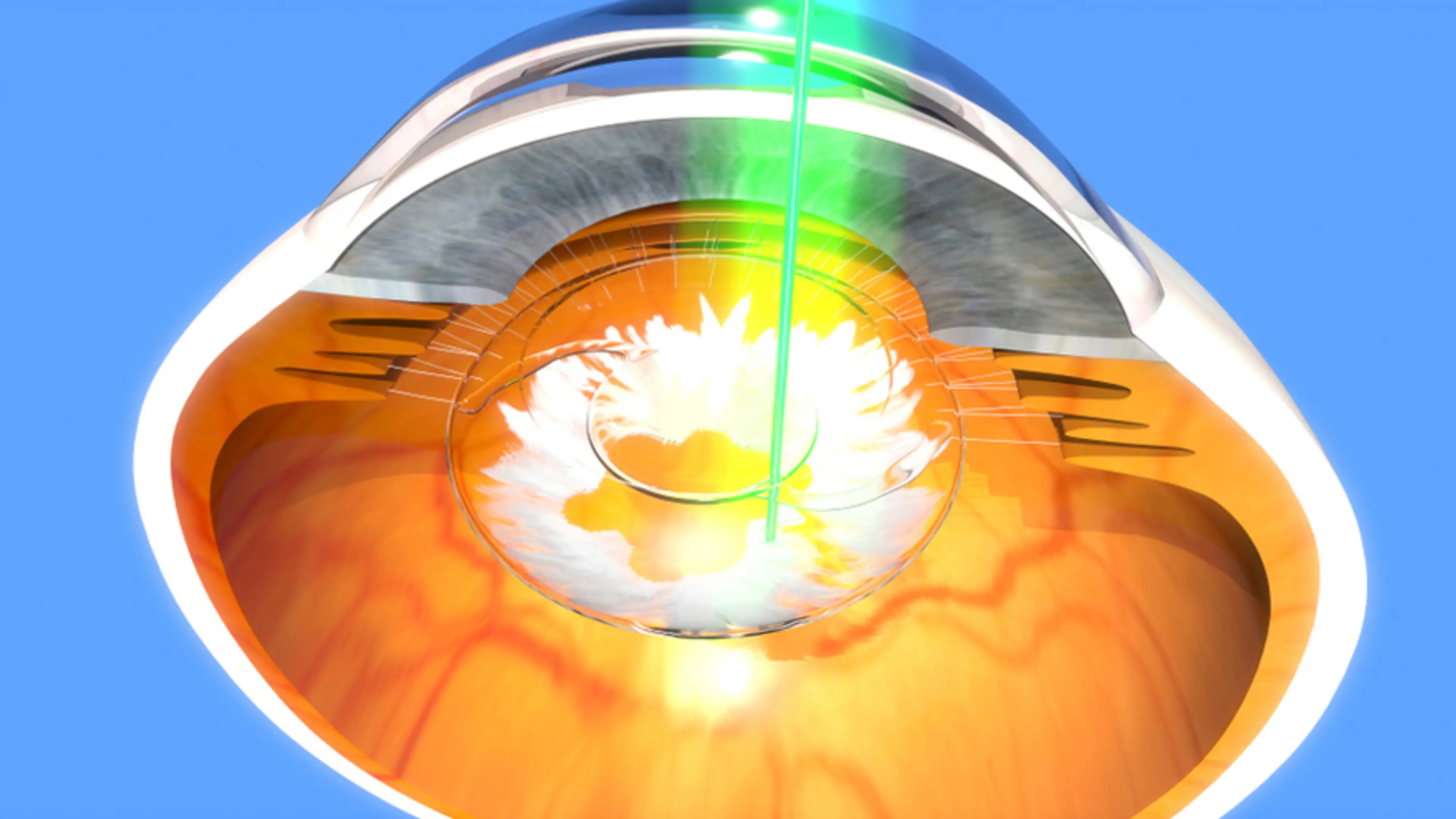
This is a specialized procedure where the surgeon removes the existing intraocular lens and replaces it with a new one. It requires exceptional surgical skill and advanced planning because, unlike primary cataract surgery, the capsule that originally held the lens may be more fragile or partially fused.
At
SNU Eye Clinic, IOL exchanges are performed under
high-resolution anterior segment imaging and surgical microscopy, often using
femtosecond laser precision to minimize tissue stress. The steps generally include:
Detailed preoperative analysis:
Using optical biometry, corneal topography, and anterior segment OCT to measure every parameter of the eye.
Safe removal of the existing lens:
Through a microincision (often 2–3 mm), the surgeon gently separates the old lens from the capsule.
Implantation of a new customized lens:
Based on your current prescription, lifestyle, and corneal condition, a new IOL is inserted — sometimes a toric trifocal or EDOF lens for better all-range vision.
Postoperative care and stabilization:
Because the procedure involves re-entering an already operated eye, healing and inflammation control are closely monitored for several weeks.
Who Is a Candidate for Lens Implant Upgrade?
who-is-a-candidate-for-lens-implant-upgradeNot everyone is a suitable candidate for lens exchange. The decision requires careful evaluation. At SNU Eye Clinic, Dr. Chung and his team consider the following:
Capsular integrity: If the capsular bag (the thin membrane holding the lens) is intact, an upgrade is often feasible.
Corneal health: A healthy cornea ensures accurate vision outcomes. Patients with keratoconus or severe dry eye may need additional management first.
Retinal condition: If there’s macular disease or diabetic retinopathy, upgrading the IOL may offer limited benefit.
General eye stability: It’s best performed when other ocular parameters — such as intraocular pressure and tear film — are stable.
“In some cases, we can also consider piggyback lens implantation,” explains Dr. Chung. “That means placing a secondary IOL in front of the existing one, without removing the original. It’s less invasive and can fine-tune vision correction.”
Is It Safe to Exchange Lens Implants Years Later?
is-it-safe-to-exchange-lens-implants-years-laterSafety depends on the condition of your eye and the experience of your surgeon. While IOL exchange surgery is generally safe in expert hands, it’s more delicate than primary cataract surgery.
Potential challenges include:
Capsule fragility (the membrane can be more brittle after years).
Zonular weakness (the tiny fibers holding the
lens can loosen with age).
Risk of inflammation or retinal detachment, though rare.
However, with modern tools like VisuMax and Zeiss microscopes and real-time anterior imaging, the risks can be minimized. At SNU Eye Clinic, the focus is on precision — using ultra-fine surgical instruments and minimally invasive techniques to protect existing eye structures.
What About Recovery After a Lens Upgrade?
what-about-recovery-after-a-lens-upgradeRecovery from an IOL exchange is usually similar to
cataract surgery — though slightly slower for some patients.
Most people notice improved vision within a few days, though full stabilization may take a few weeks. Post-surgery, patients typically use anti-inflammatory and antibiotic drops for several weeks.
At SNU Eye Clinic, follow-up appointments include corneal mapping and OCT imaging to ensure perfect lens positioning and clarity.
“Even in older adults, visual recovery can be surprisingly quick,” says Dr. Chung. “The key is precise planning and using lenses that match the patient’s individual eye profile.”
The Role of Technology in Safe IOL Exchange
the-role-of-technology-in-safe-iol-exchangeTechnology plays a defining role in how safely and successfully a lens upgrade can be performed.
At SNU Eye Clinic, advanced diagnostic platforms are used for every patient:
IOLMaster 700 for precise biometric measurement
Pentacam HR for corneal analysis
Anterior Segment OCT for capsule assessment
High-resolution surgical video guidance for intraoperative accuracy
With these tools, Dr. Chung can simulate outcomes before surgery, ensuring that each patient receives the most suitable lens type — whether that’s a toric trifocal or EDOF hybrid lens for active lifestyles.
Alternatives to Full Lens Exchange
alternatives-to-full-lens-exchangeIf the idea of removing your current IOL feels too invasive, there are alternatives that can still improve your vision:
1. Piggyback (Add-On) IOLs
1.-piggyback-(add-on)-iolsAs mentioned, a small secondary lens can be placed in front of the existing IOL to adjust power or add multifocality. This method avoids touching the capsular bag, making it safer in some cases.
2. Laser Enhancement
2.-laser-enhancementIf your visual dissatisfaction comes from minor refractive error rather than the lens type itself,
SMILE PRO or LASIK enhancement can refine vision without replacing the IOL.
3. Prescription Optimization
3.-prescription-optimizationFor certain lighting or near-vision issues, updated glasses for specific tasks (like night driving) may suffice.
At SNU Eye Clinic, every patient undergoes a full diagnostic review before deciding which path offers the greatest benefit with the least risk.
How Long Do Modern IOLs Last?
how-long-do-modern-iols-lastModern intraocular lenses are designed to last a lifetime. They don’t degrade, warp, or dissolve — meaning most patients never need another lens surgery once the right IOL is in place.
That’s why choosing the right lens from the start is so important. Today’s IOLs, particularly those made from hydrophobic acrylic materials with UV and blue-light filters, are designed for long-term optical stability and biocompatibility.
For patients who had earlier-generation lenses implanted 10–20 years ago, technology has advanced dramatically. If visual needs have changed, upgrading can be considered — but it’s not mandatory for everyone.
What to Expect at a Consultation?
what-to-expect-at-a-consultationA thorough preoperative evaluation is the foundation of success. At SNU Eye Clinic, consultations for potential IOL exchange include:
Comprehensive visual function testing (contrast sensitivity, glare test)
Corneal tomography and wavefront analysis
Ocular surface and tear film assessment
Discussion of lifestyle needs (driving, reading, digital work)
Simulation of visual outcomes with different IOL options
Each consultation ends with a clear explanation of what can realistically be achieved — and whether an upgrade is worth pursuing.
What Patients Say After Lens Upgrades?
what-patients-say-after-lens-upgradesMany patients describe the improvement as “seeing in high-definition.” Those who previously struggled with glare or dependence on glasses often notice immediate relief.
A 68-year-old patient who upgraded to a trifocal lens at SNU Eye Clinic shared:
“After my first cataract surgery years ago, I could see far well but needed glasses for everything else. After Dr. Chung’s upgrade surgery, I can finally read and use my phone without them. It feels like my eyes became 20 years younger.”
The Bottom Line: Should You Upgrade Your Lens Implants?
the-bottom-line:-should-you-upgrade-your-lens-implantsIf you’re satisfied with your current vision, there’s no need to change what’s already working. But if you’ve noticed limitations, discomfort, or simply want to take advantage of today’s advanced technology, a consultation with an experienced refractive and cataract specialist can clarify your options.
At SNU Eye Clinic, every IOL exchange is guided by the principle of precision over risk — ensuring that any change truly enhances your quality of life.
“Our goal isn’t just sharper vision,” says Dr. Chung. “It’s confidence — knowing that your eyes are cared for with the same precision we’d use for our own family.”
Considering a Lens Upgrade?
considering-a-lens-upgradeIf you’ve had cataract surgery in the past and are wondering whether an upgrade could improve your vision, schedule a personalized consultation at SNU Eye Clinic in Gangnam. With over 50,000 successful surgeries and 5,000+ premium lens implantations, our team can help you see whether an IOL exchange or enhancement is the right next step for your eyes.