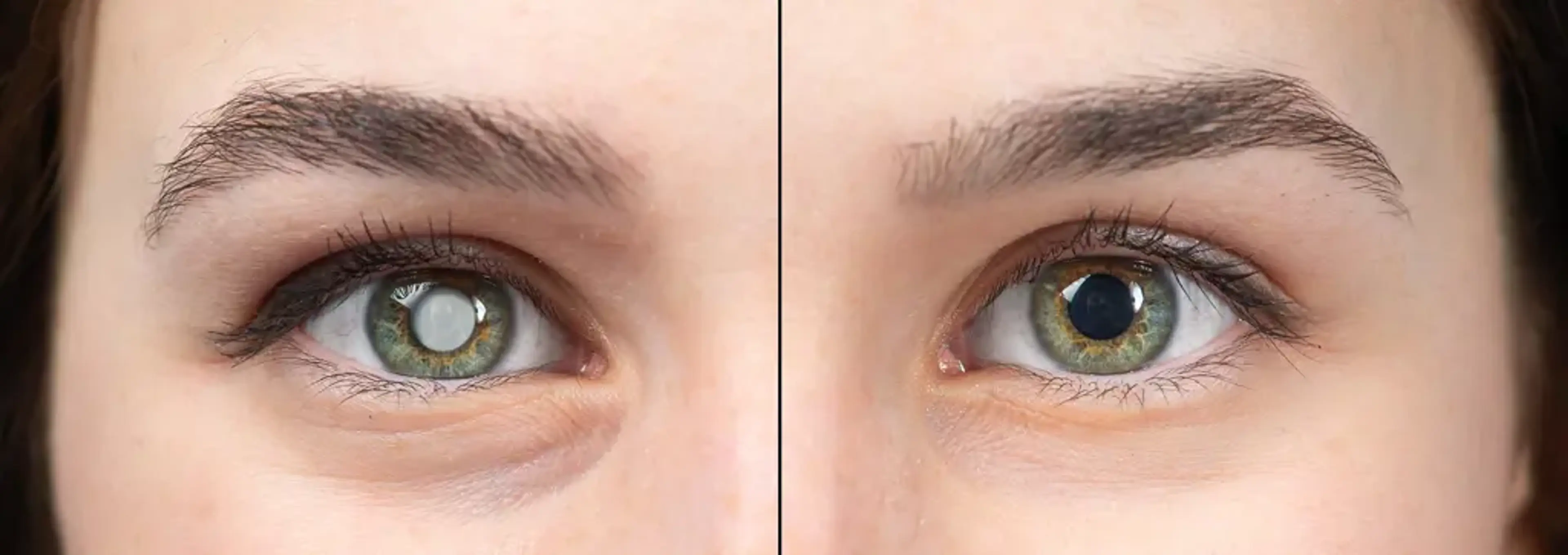
Can Vision Correction Surgery Cause Blindness?
can-vision-correction-surgery-cause-blindnessThe Truth Behind the Fear
the-truth-behind-the-fearImagine waking up after years of wearing glasses, opening your eyes, and being able to see clearly — no lenses, no fog, no discomfort. For many people, that’s the promise of modern vision correction surgery. Yet, even as technology has advanced dramatically, one question continues to surface:
“Can eye surgery cause blindness?”
It’s a fair — and deeply human — fear. After all, our eyes are irreplaceable. Whether you’re considering
SMILE LASIK,
ICL lens implantation, or
cataract surgery, understanding the real risks versus myths is essential before you take that step toward clearer vision.
At SNU Eye Clinic in Gangnam, we meet patients every week who share this same concern. Some have been delaying surgery for years because they once heard a story about someone “losing their sight after LASIK.” The truth, as we’ll explore here, is far more nuanced — and far more reassuring.
Where the Fear Comes From?
1.-where-the-fear-comes-fromFear of blindness after vision correction surgery often comes from two sources:
Historical procedures that were less precise than today’s methods.
Anecdotal stories or online posts taken out of context.
In the early days of laser vision correction in the 1990s, technologies were new, and complication rates were higher. Some patients experienced visual side effects such as halos, glare, or under-correction. However, the idea that surgery could directly cause blindness often came from rare infection cases or misinterpreted outcomes.
Today’s procedures — especially SMILE PRO and Toric ICL — are performed with micron-level accuracy under real-time eye tracking and 3D imaging. The chance of severe vision loss is extremely rare, often less than 1 in several million.
To put that in perspective: the risk of losing vision from everyday contact lens use is statistically higher than from a modern laser eye surgery.
What “Blindness” Really Means in Medical Terms?
2.-what-"blindness"-really-means-in-medical-termsWhen people say “blindness,” they often imagine total darkness. But in ophthalmology, blindness is a technical term describing severe visual impairment — usually less than 3/60 (meaning you can only see at 3 meters what a person with normal vision can see at 60 meters).
The vast majority of surgical complications that occur today do not lead to permanent blindness. Even in extremely rare cases of infection or inflammation, prompt medical treatment often restores the patient’s vision fully.
At
SNU Eye Clinic, we explain this distinction clearly during preoperative counseling. Understanding the difference between temporary visual blurriness during healing versus permanent loss helps patients feel informed rather than fearful.
The Safety Evolution: From LASIK to SMILE PRO
3.-the-safety-evolution:-from-lasik-to-smile-pro
The evolution of refractive surgery over the past 30 years is a story of precision, safety, and comfort.
LASIK (Flap-Based Surgery)
lasik-(flap-based-surgery)In traditional LASIK, a thin corneal flap is created using a blade or femtosecond laser, and the underlying tissue is reshaped. It’s still a widely used method with excellent outcomes, but it involves a larger incision (about 20mm).
Potential complications: flap displacement, dry eye, infection — though all are extremely rare with experienced surgeons.
smile-(small-incision-lenticule-extraction)SMILE, and now SMILE PRO, takes safety further. Instead of creating a flap, the laser removes a small lens-shaped tissue (lenticule) through a tiny keyhole incision, just 2–3mm wide.
Think of it as slipping a tiny lens through a keyhole instead of lifting a whole window.
Advantages:
No corneal flap → lower infection and dry eye risk
More stable corneal structure → safer for active lifestyles
Faster recovery and less discomfort
At SNU Eye Clinic, we use the
ZEISS VisuMax 800 — one of the most advanced
SMILE platforms in the world. Its laser firing speed is so precise that the suction time per eye is reduced to just seconds, minimizing any discomfort or stress on the eye.
ICL (Implantable Collamer Lens)
icl-(implantable-collamer-lens)For patients with thin corneas or high myopia, the Toric ICL offers an alternative. Instead of reshaping the cornea, a soft, biocompatible lens is inserted behind the iris.
The result? Clear, natural vision — like having a permanent contact lens that you never have to remove.
Key benefit: Because the natural cornea remains untouched, the procedure is reversible and has virtually no risk of corneal weakening.
Understanding Actual Risks — and How They’re Prevented
4.-understanding-actual-risks-and-how-they're-preventedNo surgery is 100% risk-free. But understanding how rare and preventable serious complications are can transform fear into confidence.
① Infection (Keratitis)
infection-(keratitis)Incidence: <0.001% in laser procedures
Prevention: Sterile operating environment, pre-surgical eyelid hygiene, antibiotic drops
Treatment: Prompt antibiotics usually result in full recovery
② Inflammation (Diffuse Lamellar Keratitis or Interface Haze)
inflammation-(diffuse-lamellar-keratitis-or-interface-haze)Cause: Immune response to healing
Treatment: Steroid eye drops
Outcome: Usually fully reversible
③ Corneal Ectasia (Weakening of the Cornea)
corneal-ectasia-(weakening-of-the-cornea)Incidence: <1 in 10,000 with modern screening
Prevention: Advanced corneal mapping (Pentacam, anterior segment OCT) to rule out at-risk corneas before surgery
④ Glaucoma or Cataract (After ICL)
glaucoma-or-cataract-(after-icl)At SNU Eye Clinic, every patient undergoes over 50 diagnostic checks before any surgery — from corneal biomechanics to tear film stability. These tests allow Dr. Chung Eui Sang and the surgical team to eliminate unsuitable candidates before complications ever have a chance to occur.
The Role of Surgical Experience
5.-the-role-of-surgical-experienceOne of the strongest predictors of safety in vision correction surgery isn’t the laser itself — it’s the surgeon’s expertise.
Dr. Chung Eui Sang, director of
SNU Eye Clinic, is a former
professor of ophthalmology at
Seoul National University and a
Harvard Medical School research fellow. Over the past two decades, he has performed more than
50,000 successful surgeries, including over
5,000 ICL implantations.
With that level of experience, rare situations — such as unexpected anatomical variations or micro-inflammation — are recognized and managed immediately. For patients, that means a layer of safety that technology alone cannot provide.
To be honest, most patients don’t realize how much a surgeon’s decision-making matters until they experience the precision of an expert. From choosing the exact optical zone size to aligning toric lenses within a single degree, these tiny details often determine whether a good result becomes a perfect one.
Common Misconceptions About Blindness and Vision Correction
6.-common-misconceptions-about-blindness-and-vision-correction
Let’s address a few myths that often cause unnecessary worry:
Myth 1: “Laser burns your eyes.”
myth-1:-"laser-burns-your-eyes."Reality: The femtosecond laser used in SMILE or LASIK doesn’t burn — it separates tissue using cold light energy. The laser pulses last femtoseconds (one quadrillionth of a second), so there’s no heat damage.
Myth 2: “If I move my eyes, the laser could miss.”
myth-2:-"if-i-move-my-eyes-the-laser-could-miss."Reality: Modern lasers track eye movement hundreds of times per second. If your eye shifts even slightly, the laser stops automatically — and resumes once the eye is stable.
Myth 3: “I could go blind if something goes wrong.”
myth-3:-"i-could-go-blind-if-something-goes-wrong."Reality: True blindness from refractive surgery is virtually unheard of in modern ophthalmology. Even in rare cases of severe infection, timely medical care leads to full or near-full recovery.
Myth 4: “ICL is risky because it’s inside the eye.”
myth-4:-"icl-is-risky-because-it's-inside-the-eye."Reality: ICL implantation is a closed-chamber procedure, meaning it doesn’t disturb other eye structures. The lens material is biocompatible, and in skilled hands, long-term safety data shows over 99% satisfaction rates globally.
What the Recovery Process Really Feels Like?
7.-what-the-recovery-process-really-feels-likeMany patients equate “blindness” with the temporary foggy vision immediately after surgery. It’s important to know that mild blurriness or light sensitivity during the first 24–48 hours is completely normal and not a complication.
At SNU Eye Clinic, patients are often surprised by how quickly clarity returns:
After SMILE PRO: Most patients can read their phones the next morning.
After ICL: Vision stabilizes within a few days as the pupil adjusts.
After Cataract Surgery: Improved brightness and contrast are often noticeable the same day.
Our postoperative care team checks patients regularly — at one day, one week, one month, and beyond — ensuring any dryness or sensitivity is promptly managed.
Comparing Risk Levels: Everyday Life vs. Surgery
8.-comparing-risk-levels:-everyday-life-vs.-surgeryHere’s a useful way to frame it:
We take small risks every day without thinking — driving, exercising, even using contact lenses.
Situation | Risk of Vision-Threatening Complication |
|---|
Long-term contact lens wear (10 years) | 1 in 2,000 |
Recreational eye trauma (e.g., sports injury) | 1 in 1,200 |
LASIK / SMILE / ICL at certified clinic | 1 in 3–5 million |
In other words, your morning jog or daily commute likely carries a higher risk to your eyes than SMILE surgery performed by an experienced surgeon.
Why Preoperative Screening Is the Real “Safety Net”?
9.-why-preoperative-screening-is-the-real-"safety-net"The key to preventing blindness isn’t during the laser shot — it’s before surgery ever begins.
At SNU Eye Clinic, we conduct what we call a “Triple Precision Screening” protocol:
Corneal Strength Analysis – using Pentacam HR and Corvis ST to evaluate biomechanical stability.
Wavefront & Aberration Testing – to detect subtle optical imperfections that might affect night vision.
Tear Film & Ocular Surface Evaluation – because even mild dryness can affect healing quality.
Patients who don’t meet the safety parameters are advised not to undergo surgery — and we’re proud to say that declining a case is sometimes the most ethical medical decision we can make.
What Real Patients Say After Surgery?
10.-what-real-patients-say-after-surgeryOne of the most reassuring indicators of safety is the experience of real patients.
A 28-year-old designer shared: “I was terrified I might go blind. But the next day, I was already working on my laptop. It felt surreal — like a fog lifted.”
A 42-year-old flight attendant who chose Toric ICL said: “Dr. Chung explained every detail. I realized the biggest risk wasn’t blindness — it was continuing to live with blurry vision.”
At SNU Eye Clinic, many patients return years later for routine checkups, their vision still crystal-clear after a decade. That kind of long-term data is what truly builds trust — not just numbers on a brochure.
The Real Takeaway: Precision, Prevention, and Peace of Mind
11.-the-real-takeaway:-precision-prevention-and-peace-of-mindTechnically, it’s possible — but practically, it’s extraordinarily rare.
The risk is lower than many everyday activities, and when performed by skilled surgeons using modern diagnostic systems, the probability is almost negligible.
The key pillars of safety are:
Meticulous Pre-Screening – rule out risky eyes.
Experienced Surgeon – judgment matters more than machines.
Advanced Technology – like the ZEISS VisuMax 800 or Toric ICL V5.
Comprehensive Aftercare – quick detection, quick resolution.
At SNU Eye Clinic, our philosophy is simple:
Vision correction should be transformative — never traumatic.
Every decision, from diagnosis to postoperative care, is made to ensure your safety and satisfaction for decades to come.
When to Seek Medical Help After Surgery?
12.-when-to-seek-medical-help-after-surgeryAlthough rare, recognizing early warning signs ensures optimal recovery. Contact your doctor if you experience:
Persistent pain or redness beyond 48 hours
Sudden drop in vision
Unusual discharge or swelling
Light flashes or floating spots
At SNU Eye Clinic, patients have access to 24-hour postoperative contact lines, ensuring that if something feels off, help is just a call away.
A Balanced Truth: Surgery Isn’t for Everyone
13.-a-balanced-truth:-surgery-isn't-for-everyoneWhile the fear of blindness may be largely unfounded, it’s equally important to recognize that not every eye is suitable for surgery.
If you have conditions such as keratoconus, severe dry eye, or autoimmune disease, laser or ICL procedures might not be recommended. In those cases, non-surgical options or specialized contact lenses may provide safer alternatives.
Our role as ophthalmologists isn’t to convince everyone to have surgery — it’s to ensure that those who do are perfectly selected for success.
Moving Past Fear: The Modern Reality of Vision Correction
14.-moving-past-fear:-the-modern-reality-of-vision-correctionIn the end, the idea that you could go blind from vision correction surgery belongs to a different era — one before high-speed lasers, one-to-one patient mapping, and experienced surgeons who treat the eye as both science and art.
At SNU Eye Clinic, we’ve seen how reclaiming clear sight can change lives — young professionals freed from glasses, parents rediscovering the joy of seeing their children clearly, retirees reading without strain.
And through all these stories, one truth stands out: clarity replaces fear when information and trust come together.
Final Word from Dr. Chung Eui Sang
15.-final-word-from-dr.-chung-eui-sang“The eyes are small organs with extraordinary complexity. When we perform surgery, it’s never about rushing results — it’s about respecting that complexity. True safety comes from preparation, precision, and experience. If you approach vision correction with those three values, blindness isn’t something you need to fear — it’s something you’ll leave far behind.”
If You’re Considering Vision Correction…
if-you're-considering-vision-correction...If you’ve been living with the inconvenience of glasses or contact lenses, or if fear has held you back from exploring surgery, take your time — ask questions, visit clinics, and see the technology for yourself.
When you’re ready, consider a consultation at a precision-focused clinic like SNU Eye Clinic, where every decision is guided by experience, safety, and trust.
Because clear vision should come with complete peace of mind.
SNU Eye Clinic, Gangnam
Led by Dr. Chung Eui Sang — Former Professor, Seoul National University / Harvard Medical School Research Fellow / Over 50,000 successful eye surgerie